
Groundlessness
Part 5: Crossing the empathy wall

I began this series with “The challenge of seeing real human beings,” in which I began “exploring how to heal the vast, dangerous wounds that are tearing our nation apart.” My observation about present-day Americans was that
we are trapped in the rhetoric of irreconcilable enemies…. These circumstances injure the innate nature of the human race, with all of its confounding mystery, diversity, and potential. What we have instead is a complex conflict based almost entirely on ideological and religious abstractions.
Seeking an opening, I introduced the metaphor of Hiroshi Sugimoto’s photo collage “Time’s Arrow,” a porthole-shaped image of sky and sea surrounded by an ornate bronze frame on a black background. I labeled the background and frame as just what they are: something artificial imposed around the real sky and sea.
That real sky and sea represent the boundless, impermanent, ever-changing nature of reality. Yet we humans habitually isolate ourselves from each other on the inside of the porthole. Our vision is severely constrained by the perceptual and conceptual limitations of our own brains. However, we cling to these limits in order to sustain an illusory sense of safety. An imaginary space where we can survive individually without suffering.
In “Stepping through the porthole” I extended Sugimoto’s metaphor by looking at “Caribbean Sea, Jamaica,” the image that he framed within the porthole of “Time’s Arrow.”
The challenge we all face is this: to leave behind the background and the frame. To step through the porthole into the groundlessness of the real world, where there is only the sea and the sky, with no certain place to stand.
This can be extremely disorienting and frightening. To face the real world, to face the every-changing, contradictory flood of events and information and emotions—without defenses. To turn around and look at ourselves as we learn to act in the real world.
The remainder of the series has been—to my own surprise—a matter of narrating in real time a series of personal crises that demonstrates this very process of stepping through.

“Living at a crossroads” describes my overreaction to finding that someone had removed from our Quaker meetinghouse library three plants I had been nurturing.
I was instantly overcome with anger and hurt and a sense of offended ownership. The intensity and persistence of these feelings was startling. I couldn’t bring myself back under control. The resentful narrative kept recycling. All that turmoil came with me into silent worship. It never really resolved.
In worship that trivial incident triggered a powerful sense of vulnerability to people who disrupt my “safe space.” As I sat with that pain, though, I gradually connected at gut level with the immigrant families who are being broken open daily by ICE raids in the United States. Also with the families being displaced, starved, and murdered every day in Gaza.
“Tossed into the sea” took me even deeper into this crisis of rediscovery. The disappearance of another plant a week later threw me back into the echo chamber of resentful hurt and anger. This time, though, I also stumbled into memories of a childhood trauma. A trauma that I have never forgotten, but whose emotions I have not relived viscerally as an adult.
In fourth grade, my best friend Mark suddenly refused to play with me any more. I had no idea what I had done to deserve this. As is so often the case with severe trauma, my brain walled that emotional pain off from consciousness for decades. I could narrate the events and my mother’s eventual explanation years later. But until that morning in Quaker worship, I had no direct recall of the loss and grief.
As I wrote in Part 2, “Removing artificial backgrounds and frames doesn’t fix the situation. It enables us to enter into the situation along with the other person.” With this second lost safe space crisis, I stepped through into the emotional reality of all those broken families.
I suddenly knew first hand the physical grief of forcefully separated families and friends. When those with power over us disrupt our lives so completely, so inexplicably, there is no relief, no way forward. All those immigrant families, all those Palestinian families, all those refugees, are now with me intimately.
This sort of real-time connection is essential to what sociologist Arlie Russell Hochschild calls “crossing the empathy wall.” I first referred to Hochschild’s usage of the term “empathy wall” in “There is no nation without genuine conversation” (3/27/2025).
We have to want to understand where others are coming from, what their “deep story” is. Even if we totally disagree with what they are saying. Even if we despise what they are doing.
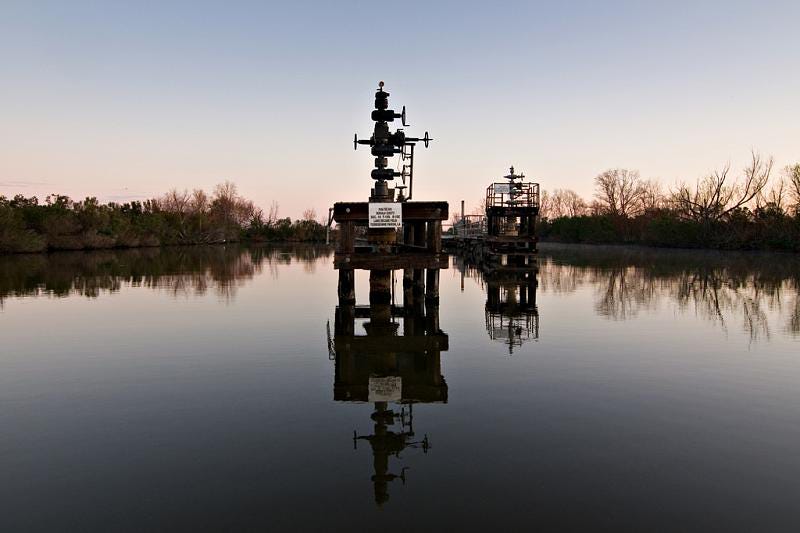
One day in the mid-2010s, Hochschild drove through the industrial outskirts of Lake Charles, Louisiana, with Sharon Galicia, a single white mother who was selling medical insurance to support her kids. Sharon told stories of her family’s struggles and those of the young bayou country workers, all of who seemed to be under the thumb of oil company exploitation and complicit right-wing politicians [see Note].
Hochschild writes:
I thanked Sharon…for allowing me to follow her in her rounds, but later in my mind I thanked her again for her gift of trust and outreach. And after a while it occurred to me that the kind of connection she offered me was more precious than I’d first imagined.
It built the scaffolding of an empathy bridge. We, on both sides, wrongly imagine that empathy with the “other” side brings an end to clearheaded analysis when, in truth, it’s on the other side of that bridge that the most important analysis can begin.
The English language doesn’t give us many words to describe the feeling of reaching out to someone from another world, and of having that interest welcomed. Something of its own kind, mutual, is created. What a gift. Gratitude, awe, appreciation; for me, all those words apply and I don’t know which to use.
But I think we need a special word, and should hold a place of honor for it, so as to restore what might be a missing key on the English-speaking world’s cultural piano. Our polarization, and the increasing reality that we simply don’t know each other, makes it too easy to settle for dislike and contempt.
As my own story demonstrates, my first step in crossing that wall obliged me to reconnect the abstract “news” of other people’s suffering with the reality of my own pain and grief. A next step would be to do as Hochschild has done: to seek such a connection with those I disagree with, even those whom I see as “the enemy.” That’s a step I have not at yet done well at all.
What is it in the real lives and the generational deep stories of these people that would open a window for me? What would show me that we are on the “same side” of our mutual struggles? How might we learn to collaborate in sustaining life, safety, self-respect, belonging, and love for each other?
Perhaps Hochschild’s leading is not mine to follow. Yet there must be some way to open myself further—beyond those whose suffering I already care about. The next post looks a bit further into this.
Note:
In her 2016 book, Strangers in Their Own Land: Anger and Mourning on the American Right, Arlie Russell Hochschild sought to understand why people who for generations have suffered under the most harmful of corporate and political exploitation nonetheless were ardent Tea Party and Donald Trump supporters.
Image source:
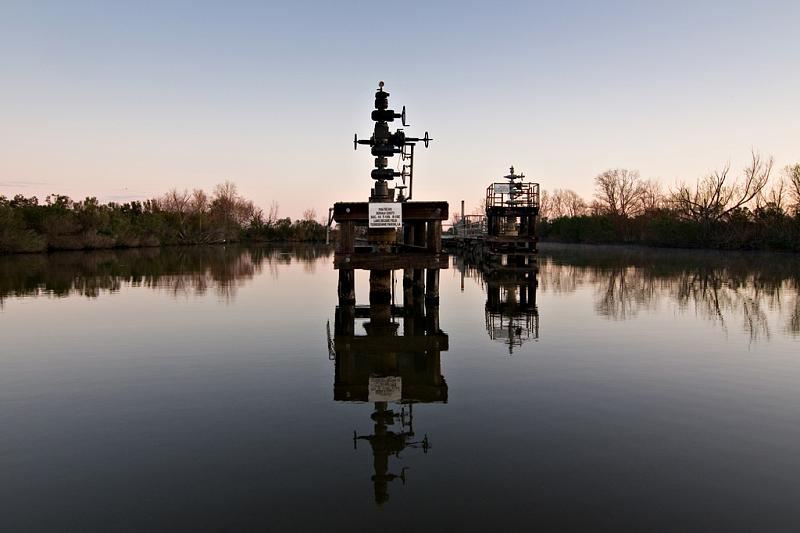
“LANDLOSS—submerged pipe,” A wellhead in the wetlands, by Paul Goyette [Creative Commons Attribution 2.0 Generic – CC BY 2.0].
Reproduced in the transcript of the Living on Earth episode entitled “Losing Ground,” 9/192024.
Levees along the Mississippi river and years of oil and gas extraction have caused dramatic erosion and subsidence in Louisiana. Bob Marshall, a reporter with the New Orleans news-site The Lens, discusses the new interactive project he developed with ProPublica with host Steve Curwood and explains how the vanishing land could displace thousands of people if nothing changes.
This series is brilliant, Mike, and the fact that it's so immediate and personal makes it more accessible. Thanks for being so open and for sharing your process. Sending love.... <3